
Industry: Oil & Petroleum Testing, Mining & Field Analysis
Project Location: Africa
Solution: 20GP Mobile Container Laboratory
Moving laboratory capabilities closer to remote operations can help industrial teams establish dedicated testing workspaces without constructing a permanent facility. For an oil testing project in Africa, VitalLab supplied a factory-fitted 20GP container laboratory with essential laboratory furniture, a fume hood, explosion-protected electrical outlets and lighting, a water heater, and a water storage tank. The completed unit was shipped ready for site connection and can be relocated when project requirements change.
In oilfield operations and mineral exploration, the location of testing activities may be determined by the project site rather than the availability of an established laboratory building. A permanent facility is not always the most practical option, particularly when operations take place in remote areas or the working location may change.
For this African project, the client selected a 20GP shipping container as the foundation for a dedicated oil testing laboratory. The challenge was to accommodate essential laboratory functions and supporting utilities within a restricted interior while keeping the facility suitable for transportation and future relocation.
VitalLab configured the container as a compact, integrated laboratory workspace rather than an empty enclosure requiring the client to source and install the furniture separately.
A container laboratory must make effective use of every available area. Laboratory benches and a fume hood were incorporated into the interior to establish designated spaces for laboratory work and relevant procedures requiring local exhaust ventilation.
The compact layout helps consolidate essential functions within one transportable structure. For applications involving petroleum samples or industrial field analysis, the final arrangement must be matched to the actual testing methods, equipment dimensions, sample preparation steps, and required working clearances.
This approach can also inform the design of mobile laboratories for mineral testing, geological exploration, and other remote industrial applications.
The project included explosion-protected electrical outlets and lighting to address the client's requirements for the intended oil testing environment.
Where flammable gases or vapors may be present, electrical installations must be selected according to the hazardous-area classification and applicable regulatory requirements. Equipment certification, installation methods, ventilation, and the overall laboratory design must be assessed together.
The inclusion of explosion-protected components is an important project specification, but it does not by itself establish that the complete container laboratory is certified for every hazardous location.
A water heater and water storage tank were included as part of the laboratory configuration.
Integrating these facilities into the project helps coordinate water-related provisions with the available interior space, rather than leaving the client to arrange separate components after delivery.
The required tank capacity, hot-water provision, plumbing connections, and drainage arrangements depend on the intended procedures and the infrastructure available at the destination.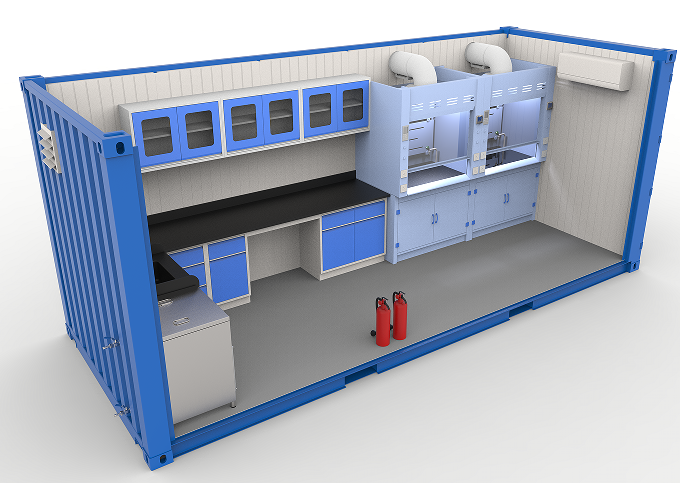
A key feature of this project was the factory-fitted delivery model.
VitalLab installed the laboratory furniture and specified facilities inside the container before shipment. The client therefore received a substantially fitted-out laboratory unit rather than a collection of furniture components that needed to be assembled individually at the destination.
Once delivered, the unit could be connected to the required site utilities, subject to local water and electrical compatibility, installation checks, and commissioning.
This approach can be particularly useful for companies working in remote locations, where coordinating multiple installation contractors or transporting separate furniture components may add complexity to project deployment.
The actual time required to bring a container laboratory into service will depend on site preparation, utility availability, equipment installation, and the required safety approvals.
The 20GP shipping-container format provides a practical basis for transporting the laboratory to another suitable location when operational requirements change.
For mobile oil testing operations, mining exploration campaigns, and temporary field testing projects, relocation can be an important consideration when planning laboratory infrastructure.
An appropriately equipped truck and trailer can transport the unit when the container, lifting points, transport equipment, road conditions, and local requirements are suitable.
Before movement, the laboratory must be prepared for transport. Equipment, internal fittings, water systems, electrical connections, and ventilation components should be secured or disconnected as required.
The container's service life will depend on its structural construction, protective coatings, environmental exposure, maintenance, and transportation frequency. These factors should be considered when specifying a laboratory intended for long-term field use.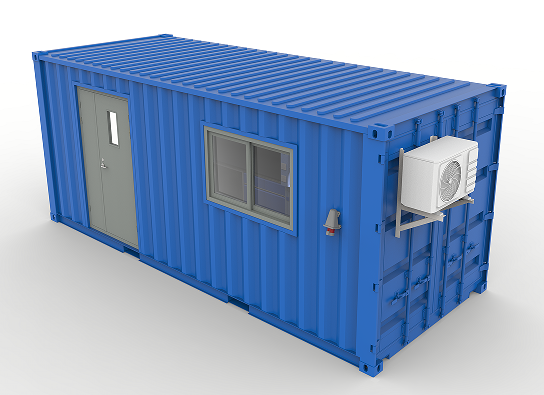
The same general design approach can be adapted to different industrial field environments, provided the interior layout, equipment, ventilation, and safety provisions are designed for the intended application.
These are potential applications of the containerized laboratory concept, not additional projects represented by this case study.
A mobile laboratory should be planned around the work it needs to support, not simply around the dimensions of the container.
VitalLab provides customized laboratory furniture and containerized laboratory solutions for industrial testing and field applications. Configuration options can be discussed according to the container size, testing procedures, equipment list, ventilation requirements, electrical specifications, water supply, and expected transport conditions.


